

The Operationalisation Of AfCFTA Will Increase Africa's Trade Volumes By $35 Billion Annually
Mr Alan Kwadwo Kyerematen, the Minister of Trade and Industry, has said the
operationalisation of the African Continental Free Trade Area (AfCFTA) is estimated
to increase intra African trade by US$35billion annually or 52 per cent by
2022.
Additionally, it would address the challenges of small fragmented
markets in Africa by creating a single market, which would lead to economies of
scale.
Mr Kyerematen, who said this when he addressed dignitaries at the
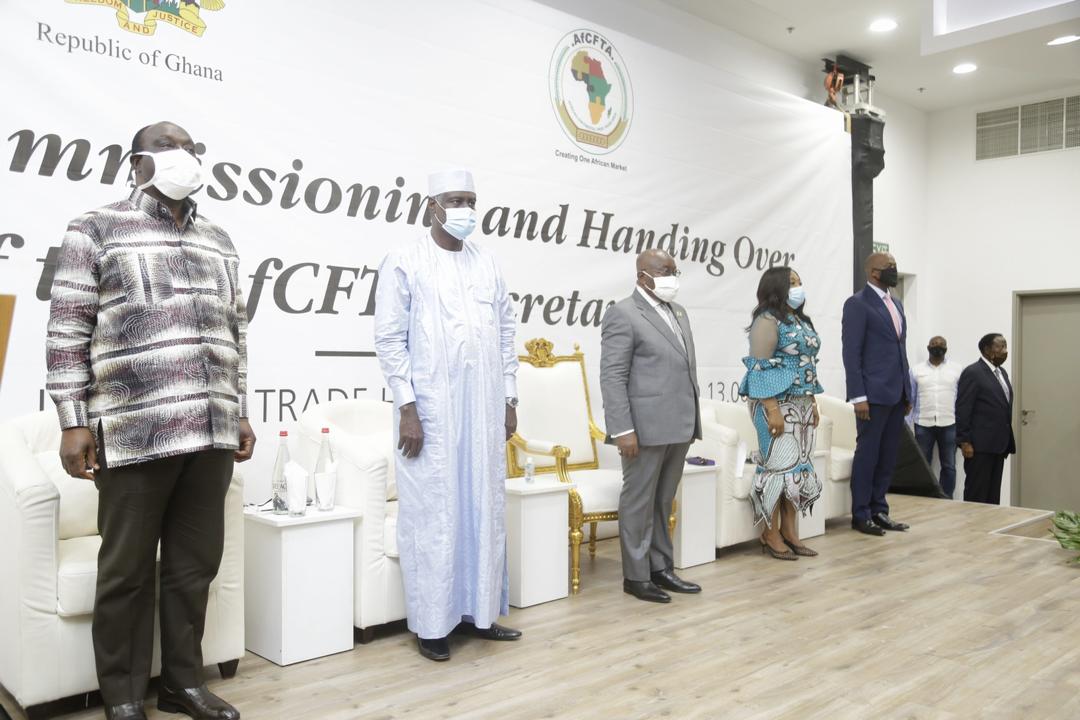
official commissioning and handing over of the AfCFTA Secretariat Building in Accra
on Monday, said the successful implementation of the AfCFTA would bring many
benefits to the Continent.
It would increase the level of intra African trade
through better harmonization and coordination of trade within Africa, he
said.
The Minister observed that the AfCFTA would add value to Africa’s
abundant natural resources and promote economic diversification and
industrialization.
He noted that it would promote the development of regional
value chains and facilitate cross border investments in Africa and open up market
access opportunities for small and medium scale enterprises.
With Africa's
population of 1.2 billion, which is estimated to reach 2.5 billion by 2050, Mr
Kyerematen said Africa would become a very attractive destination for Foreign Direct
Investment (FDI) because of its market size, with the potential for joint ventures
and enhanced local content.
More also, it would deepen the integration of
Africa into global markets through supply chain arrangements and other forms of
subcontracting transactions.
"Africa will improve its terms of trade with the
rest of the world by earning higher values for its exports through value addition,"
he said.
The Minister observed that the AfCFTA would enhance benefits to
consumers on the African Continent through lower prices of goods imported from
within Africa.
The effective operationalisation of the AfCFTA would
significantly increase employment opportunities in Africa, particularly for the
youth and other vulnerable groups.
Mr Kyerematen while acknowledging the
benefits Member States would gain from the AfCFTA, said the benefits would not be
accrued automatically and required each Member State to develop a National Programme
of Action to harness the AfCFTA's benefits, adding that, such programmes must be
mainstreamed into national development strategies.
Additionally, he said, the
effective implementation of the AfCFTA would require sustained political will and
commitment from the highest level of executive authority in each country, in respect
of providing adequate budgetary resources to support the growth and development of
priority sectors, as well as creating the appropriate incentive and regulatory
framework to attract investments from the private sector, both domestic and
foreign.
There was the need for development of national, regional and
continental trade related modern infrastructure including multi modal transport
infrastructure to improve connectivity, he said.
"There will also be the need
to diversify our economies and produce more value added products,†he
opined.
The Minister said the challenges posed by non-tariff barriers and
technical barriers to trade, including but not limited to standards, customs
clearance processes and procedures and issues relating to rules of origin would all
have to be addressed substantively.
"I'm confident that together we can
address these challenges. In doing so, a lot will depend on the efficiency and
effectiveness of the work that will be undertaken in the Secretariat building that
we are about to commission," he stated.
Mr Kyerematen noted that the
Continent's progress depended on the faith Member States have in themselves, saying;
"Let us not be haunted by the fear of failure in embarking on this project, but
rather be inspired by the prospect of success in realising our vision of a single
united market for Africa".